
Try tilting a shutter from the chair where you read. Then swing the panel fully open, as you would to clean the glass. If it fouls a lamp or catches the window winder, the layout needs another look. See also broader plantation shutter guide.
Picture the window in use
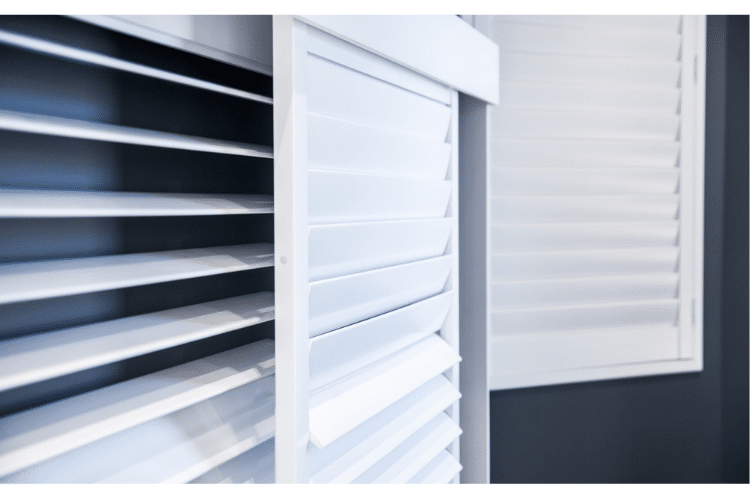
Shutters have adjustable louvres within panels. Tilting the louvres changes the balance of light, view and privacy; opening the panels gives fuller access to the window. Ask to try a display rather than judging from a photograph. Can you reach the controls comfortably? Can you open the window and operate its handle without the panel getting in the way?
A hinged panel needs clear space in front of it. Sliding or folding configurations may suit some larger openings, but each has its own track, stack and access considerations. Check which portion of a doorway remains clear when the panels are open, particularly if someone uses a mobility aid or carries things through it regularly.
Look beyond the sample colour
The selected material and finish should suit the room and the manufacturer’s instructions. A damp bathroom, a sunny living area and a kitchen near cooking splashes place different demands on a surface. Ask whether the exact proposed shutter and hardware are suitable for that location, and what moisture or cleaning restrictions apply. Do not assume that every shutter described as suitable for a bathroom can be exposed to direct shower spray.
Compare samples against the wall, window frame and floor in daylight and under the lighting you use at night. A white finish can look noticeably different from another white once it is next to your existing trim.
Ask how the fit affects light and privacy
Louvre width and the position of any central rail change the appearance and what you see through the panel. Try different louvre angles while someone stands outside: the privacy you get depends on viewing position and indoor and outdoor light. Shutters are not automatically a blackout solution. If the room needs to be very dark, discuss gaps and whether an additional covering is practical.
The frame also needs a suitable fixing surface. Bring photos of unusual reveals, window winders and any obstacles, but let the installer confirm measurements and the opening arrangement before manufacture.
A realistic care routine
Dust louvres and frames regularly using a soft, dry cloth or duster. For marks, follow the care instructions for the exact material and finish. Moisture, abrasives or cleaning chemicals are not interchangeable across all products. Support the panel gently while cleaning and report a sticking hinge or damaged component rather than forcing it. Ask what adjustment and repair options are available later.