
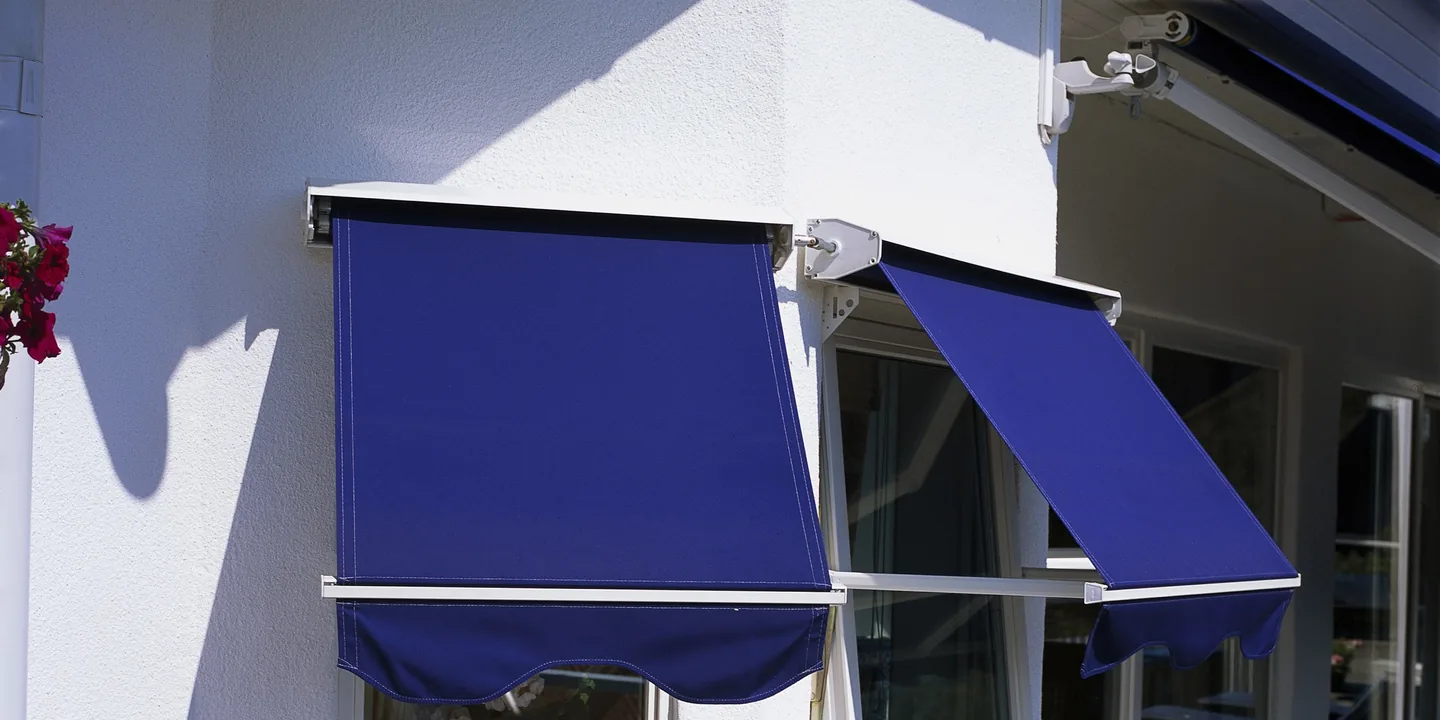
Stand outside the window when the sun is at its worst. A pivot-arm awning holds the cloth away from the glass, so you can shade the room and still look out beneath it. Check where the moving arms would pass a walkway or an opening sash.
Unlike a fixed shade, the fabric can be moved into position when it is needed and retracted when it is not. The arms change the angle of the fabric as they move. Before selecting a design, stand outside and picture the path those arms will take, not just how the awning looks when extended. Fashionline’s general awning selection guide compares other shapes if the arms would get in the way.
Start with the job, not the fabric colour
Note when direct sun reaches the glass and whether your priority is glare control, a view, or more privacy. An external covering can shade glass before sunlight reaches the interior, but the effect varies with sun angle, projection, fabric and use. A solution that shades high sun well may leave low-angle sun entering around or beneath it at another time.
A mesh fabric may preserve some outward view, although the amount depends on the actual fabric and lighting. A more opaque fabric can offer a different privacy and light balance, but will change the view. Compare samples outdoors in the direction they will face. Do not treat any fabric sample as a promise of complete privacy at night or protection from all UV exposure.
Make room for movement
Ask an installer to assess the wall or other proposed fixing surface and the space around the window. Show them window handles, screens, lights, downpipes and nearby doors. Consider the full arc of the arms, plus the space needed to operate, clean and maintain the awning. A ground-floor awning should not project into a route where someone could walk into it.
Discuss whether a manual control is reachable and convenient. Motorisation can make regular adjustment easier, but adds electrical or power considerations and maintenance. Optional weather sensors are not a substitute for the specific manufacturer’s operating instructions. Ask how to retract the awning, what to do if power fails, and when it must be put away. Do not leave an awning extended in conditions outside its stated limits. Wind and weather suitability are product- and installation-specific.
Compare quotations on the same basis
Ask each supplier to identify the system, fabric, control, installation and any protective housing included. Have the proposed measurements and fixing arrangements confirmed on site. Also ask for the care instructions, the written warranty and any limits on operation before deciding. A lower headline price is difficult to compare if it excludes the control or installation another quote includes.