
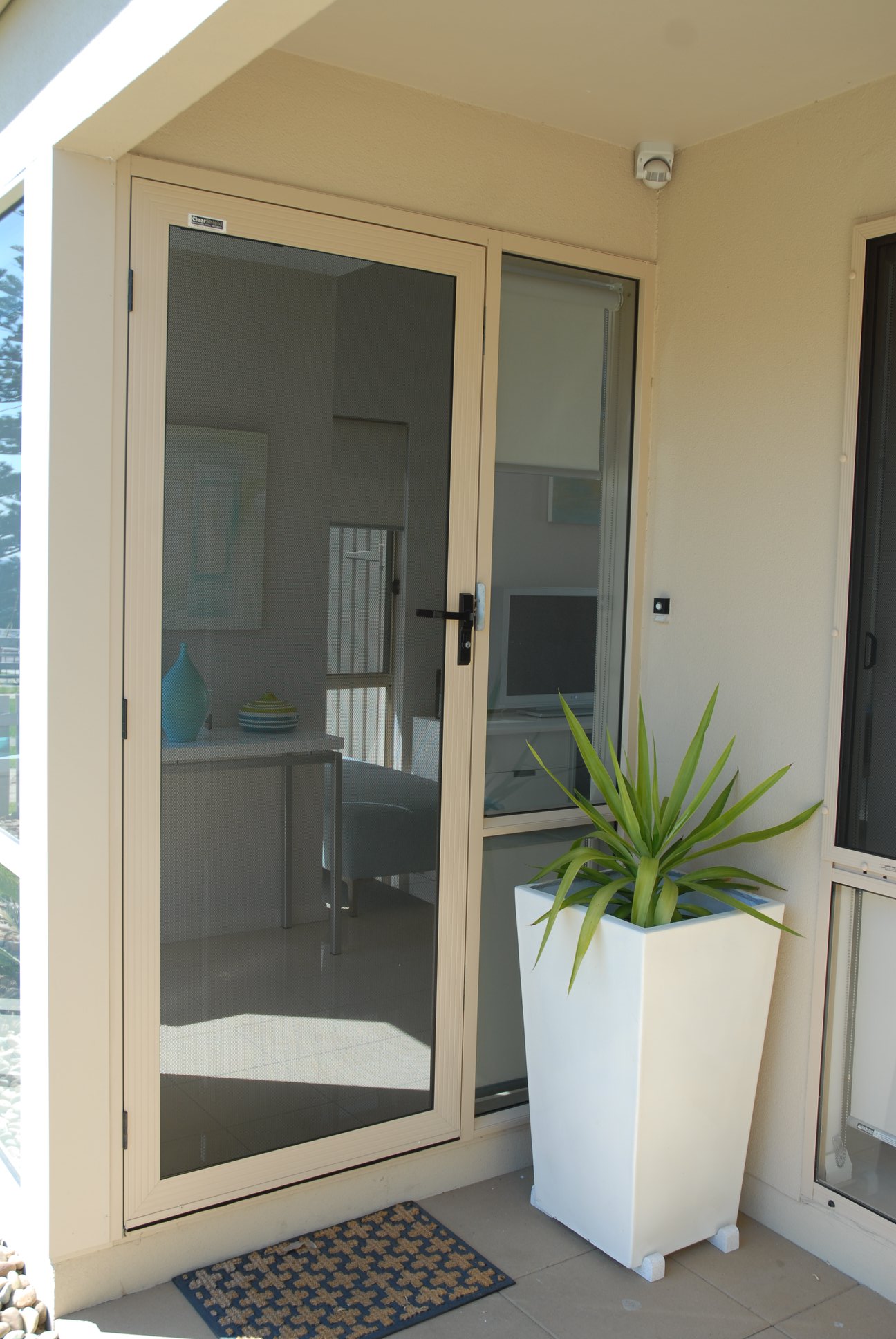
Hold the mesh sample up to the light, then ask to see a complete fitted screen. The frame, fixings and lock are part of what you’re buying. Compare the evidence for that assembly alongside airflow, outlook and care.
A flyscreen and a security screen can look similar from across a room. They are not interchangeable. If security is your reason for buying, ask the supplier to identify exactly what is being quoted and provide its supporting documentation. A product name, an impressive-looking grille or a statement about a single component is not evidence that the complete installed door or window screen meets a particular standard.
Start with the opening, not the catalogue
Is this a frequently used front door, a sliding patio door or a bedroom window? A door needs to be convenient to open and close every day. For a window, consider how it opens, how the screen is accessed for cleaning and whether the arrangement affects an intended escape route. Discuss emergency egress and any applicable building requirements with a qualified professional. Do not compromise an escape route simply to add a screen.
Look at the surrounding frame too. A screen is attached to the building, so the installer needs to assess the condition and suitability of the fixing surface. A quote that names the screen but says nothing about installation leaves an important part of the comparison unresolved.
Compare materials as a system
Ask what the mesh or grille is made from, the frame material and finish, how the infill is retained, and which locks and hinges are included. Different constructions have different visual appearances, care instructions and suitability for an exposed position. A metal name on its own does not tell you the security performance or how a particular coating will behave near the coast.
When comparing quotations, ask for documentation that identifies the tested or certified product and configuration, the relevant standard and the scope of the evidence. Check that the proposed size, hardware and installation are covered rather than assuming that every variation in a range has identical performance. A supplier should be able to explain the difference between a test report and certification if either is claimed. This article does not assess any particular screen, standard or installation.
View, breeze and privacy are separate decisions
Look through a sample from inside and outside if possible. Mesh openness, colour, lighting and viewing angle all influence what you see. A screen can permit airflow while still restricting it compared with an unobstructed opening. The result depends on the design and conditions. Ask to see the product rather than relying on a promise of an uninterrupted view.
Do not rely on mesh for privacy, particularly when the room is lit at night. Test the actual arrangement from the position of a neighbour or passer-by and, if privacy matters, plan a separate covering.
Make maintenance part of the quote
Before ordering, ask for written cleaning instructions for the exact mesh, frame, finish and hardware, including any different care needed in coastal or high-pollution locations. Ask what cleaning method might damage the finish and what maintenance affects warranty terms. If a lock becomes stiff or a screen is damaged, arrange an appropriate inspection rather than forcing it or altering security hardware yourself.
For a visual comparison, Advantage’s screening brochure (PDF) shows the difference between a diamond grille, perforated aluminium and woven steel mesh. Ask which specifications apply to the product quoted today.