
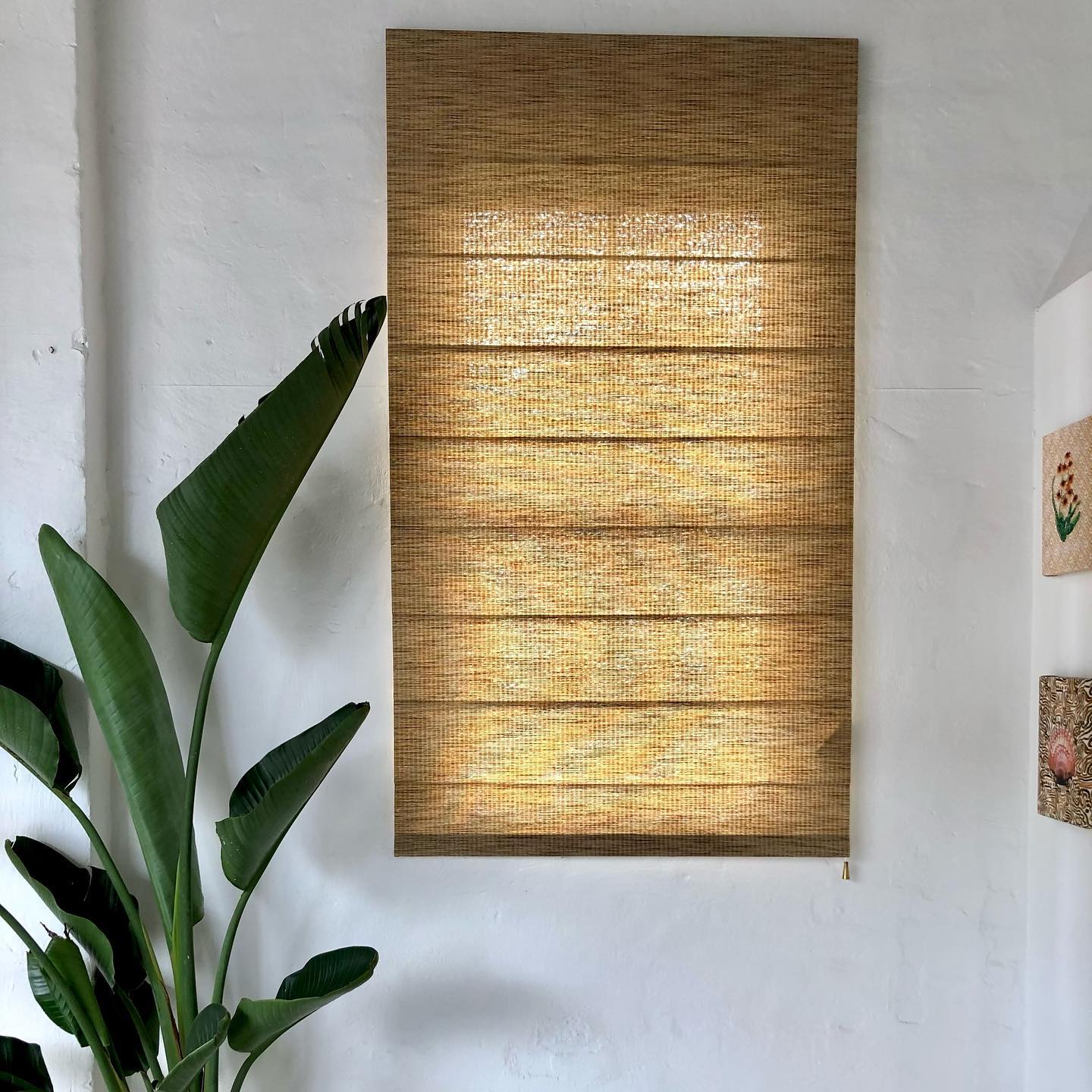
Pin two blind samples beside the frame and leave them there until the lamps come on. The colour that disappears against a wall at noon can stand out against it after dinner. See also Venetian blinds guide.
The three-reference test
- Window frame. Hold the sample beside the frame, not just against a painted wall. A subtle difference can be intentional. If you want a close match, check both in the actual room.
- Wall and floor. Place the sample near the wall and alongside flooring or a large rug. A warm off-white may sit more comfortably with some timber finishes. A cooler tone may work better with other palettes. These are choices, not rules.
- The view from outside. If several windows face the same street or courtyard, look at them together. Ask whether the fabric has the same appearance on both sides and whether a lining will be visible.
Take samples home where possible. Hold them vertically at the window in the morning, later in the day and under the lights you normally use. A small swatch on a table does not show quite the same effect as a larger vertical surface.
Blend or contrast?
A blind close in tone to the frame or wall can make the window treatment feel quieter, leaving artwork or furniture to lead. The compromise is that near-matches can look unintentionally mismatched. Compare the actual materials rather than relying on colour names.
A contrasting blind makes the window more prominent and can connect it to darker joinery or an existing accent. It is also more visually noticeable when the blind is lowered. If the room has several windows, consider whether you want that repeated block of colour across the whole wall.
Texture changes the decision too. A subtle weave may add interest to a neutral scheme. A very smooth finish can give a more uniform appearance. Look closely at the sample in a position where the sun falls across it, and ask how that particular finish is cleaned.
Test the fabric as well as the colour
A sunscreen, light-filtering and blockout fabric can look similar as small samples yet behave differently at the window. Ask to see the specific options against a bright window and check what can be seen from outside when interior lights are on. A blockout fabric may limit light through the material, but fitting gaps can still admit light.
If you want two different settings, compare a double roller arrangement with a single blind. Two independently operated fabrics can offer a filtering layer and a more opaque layer, but require additional hardware and space. Check bracket depth, window handles and the appearance of both layers before ordering. The decision is about everyday use as much as the palette.