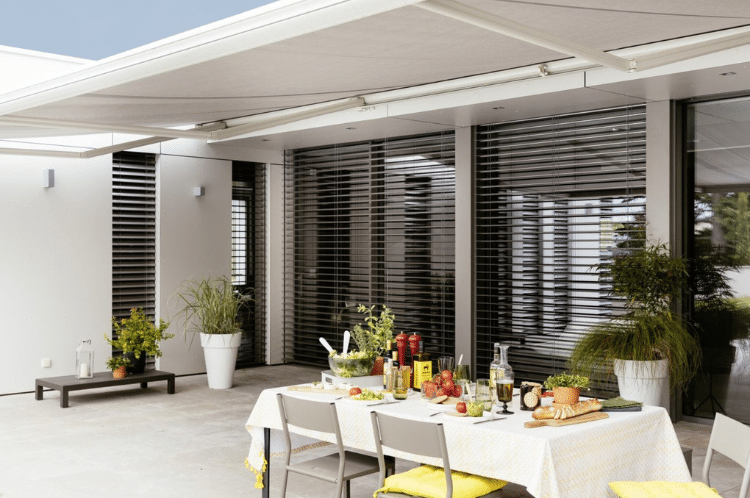
How to plan indoor and outdoor shading together
Plan external shade and indoor window coverings together for daylight, privacy and changing sun, without assuming a universal energy saving.

Ideas & advice
Explore fabrics, fittings and the Australian businesses that work with them every day.
Plan external shade and indoor window coverings together for daylight, privacy and changing sun, without assuming a universal energy saving.
Follow the sun across one window for a day. An awning can intercept sunlight before it hits the glass, while an indoor covering lets you fine-tune glare and privacy from your chair.
Decide where the power will come from before choosing a remote or app. Hardwired and rechargeable systems each affect installation, access and ongoing care.
This look back at 2023 is a record of the styles people were considering then. Compare the practical details with the light and privacy your windows need today.
If the deck feels pleasant in morning sun but too exposed at lunch, movable shade may suit it. Ask how much projection you need at the time you actually sit outside.
When sunlight slips beneath the veranda roof, a vertical drop at the edge can help. Check where the shade will fall and how much breeze the fabric will let through. The original article comes from Macarthur Home Improvements.
Walk through a display and turn the fabric between its open and closed positions. That’s the easiest way to judge how the panels handle movement, light and privacy.
Before the first long lunch outside, check how your awning operates and where it throws shade. Summer sun can reach the table from quite a different angle to spring.
Find a blinds, curtains or awnings business in your state or territory.
Browse the directory →


